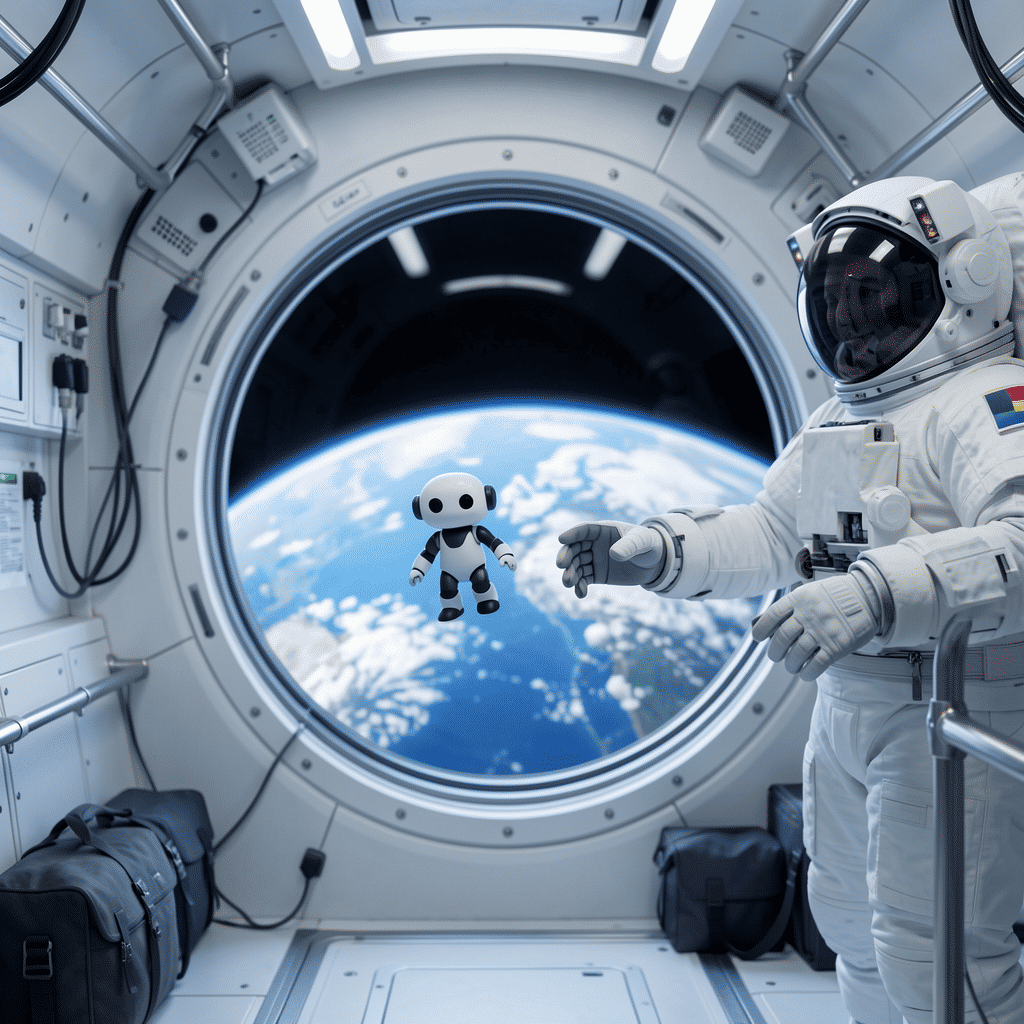
In the ever-evolving realm of space exploration, a unique figure has emerged, capturing the imagination of both scientists and enthusiasts alike: Kirobo, the tiny astronaut robot. Unlike traditional space ventures that focus on advanced machinery or manned missions, Kirobo's journey is a groundbreaking foray into helping bridge communication gaps and fostering human-robot interaction in the weightlessness of space.
Developed as a collaboration between the University of Tokyo, advertising agency Dentsu, and Toyota, with the Japan Aerospace Exploration Agency (JAXA) overseeing the mission, Kirobo is part of an innovative project designed to explore the potential of human-robot interaction beyond Earth's confines. The robot, standing just 34 centimeters tall, was launched aboard the Kounotori 4 cargo spacecraft to the International Space Station (ISS) in August 2013, kicking off an unparalleled mission in space robotics.
Kirobo’s primary mission was to serve as a communication partner for astronaut Koichi Wakata aboard the ISS. Equipped with state-of-the-art voice and facial recognition technologies, Kirobo was designed to recognize Wakata's face and engage in conversation, effectively creating an environment where human-robot dialogue can be explored and enhanced in real-time during a mission. This initiative emphasized not only the technological possibilities but also the emotional dimension of space travel, where crew members could benefit from interaction that alleviates loneliness and isolation.
Being the first speech-capable astronaut robot in space, Kirobo represents a significant leap in bridging human communication gaps, especially in the unique context of a zero-gravity environment. The challenges of long-duration space missions, such as those planned for Mars, include significant communication delays with Earth, making spontaneous conversation and immediate support systems vital for crew morale. Kirobo's journey has been instrumental in illustrating how robots might fit into this framework, offering companionship and potentially assisting with tasks, which could ease the psychological burdens faced by astronauts.
Moreover, Kirobo's mission is pivotal from a cultural standpoint. The robot is named to reflect the union of "Kibo," meaning hope in Japanese and the name of the ISS's Japanese Experiment Module, with "robot." This name embodies the blend of human aspiration and robotic potential. The project illustrates Japan's commitment to leading in robotics while showcasing the soft power of infusing technology with cultural significance.
Kirobo's presence on the ISS has not just been about technological achievements but also about inspiring the next generation. The image of a small, talking robot floating through the space station invites audiences young and old to consider the possibilities that occur when creativity and technology converge.
In summary, Kirobo's space mission is more than just a demonstration of advanced robotics; it’s a visionary step towards understanding and nurturing human-robot interactions in extraterrestrial settings. By addressing the communication and emotional needs of astronauts, Kirobo paves the way for more inclusive and supportive space missions. As humanity stands on the brink of deeper space exploration, the lessons learned from Kirobo's time in zero gravity will be crucial in helping shape future interactions between humans and their robotic companions on and beyond our home planet.